

Video Production Trends from 2024 and What to Expect in 2025
 2025-01-29
  17:22:10
Content creation (for want of a better phrase) has always been a pretty fluid environment. Creative people get access to new technology and do fun things with it, or come up with new styles that everyone else then copies. Hence the trends and styles that re-shape the landscape and the endless repetition that results. In 2024, we witnessed a lot of interesting changes that pushed boundaries and brought fresh opportunities for businesses and brands alike. There were plenty of viral videos but lots of other fascinating changes. The video production industry is, as always, evolving rapidly. As we look to 2025, it’s clear that the trends shaping 2024 will only intensify and give rise to even more eyecatching advances and contagious trends.
Here we’ll explore the most important video production trends of 2024 and make predictions about what we can expect in 2025. Whether you’re looking for inspiration, are part of a startup seeking attention or are considering an animated explainer video for your brand, being aware of these trends will help you stay ahead of the curve.
Video Production Trends: Make your videos longer!
You should be able to tell if a blog like this is AI generated because it’ll bang on about short attention spans. One of the most prominent trends in 2024 is the increased demand for short-form video content that’s a little bit longer. The reduction of average video length over time has been true for ages, but it’s changing. With stats showing an attention span of 2.5 minutes in 2004 to a whopping decrease to 47 seconds in 2023, it’s no wonder that platforms like TikTok, Instagram Reels, and YouTube Shorts are dominating the social media landscape. Now short-form videos have become a go-to medium for both brands and consumers.
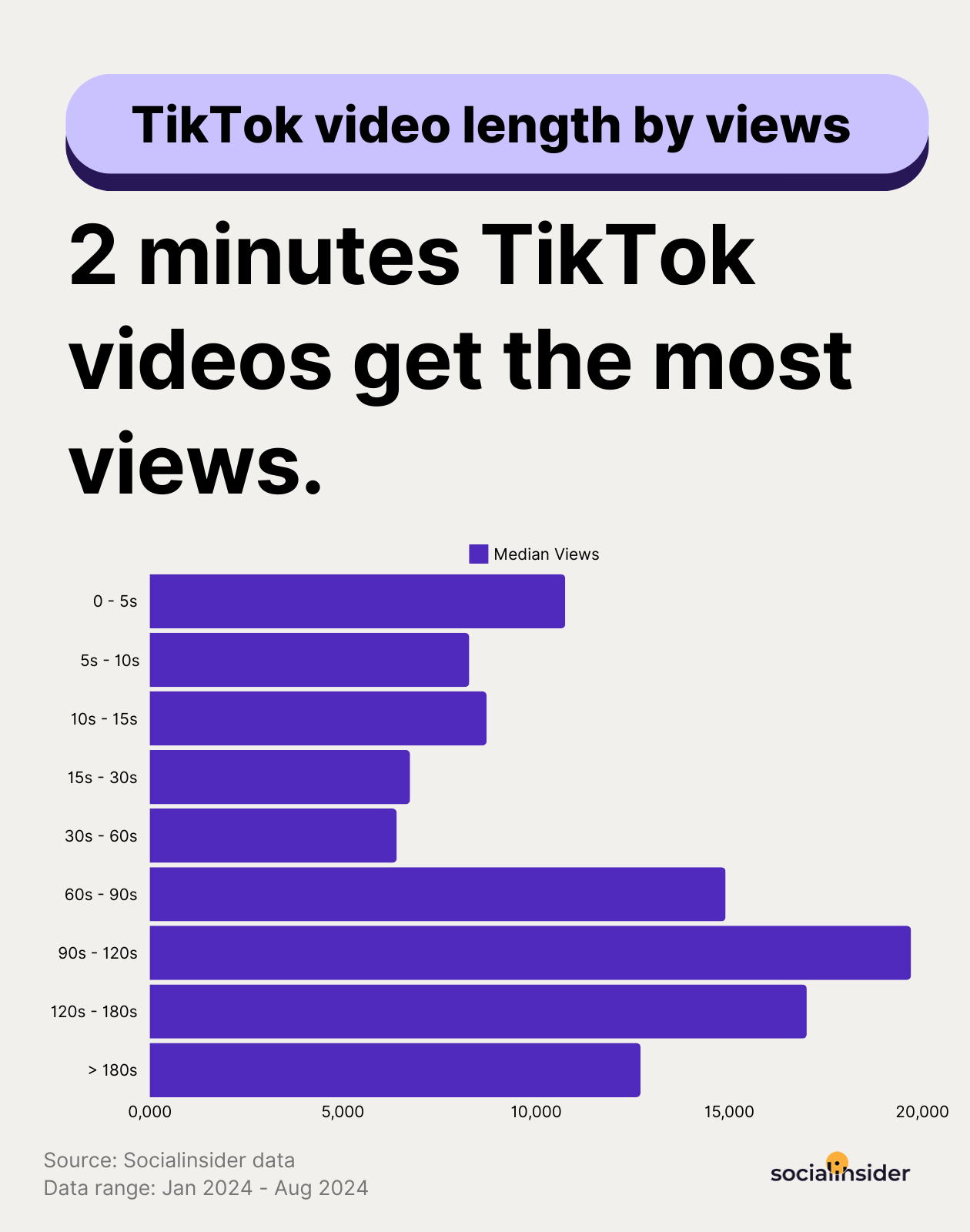
But in 2025 we might be seeing a slight change to viewers attention span, and that it’s actually getting longer. As shown, the most successfully viewed videos on TikTok in 2024 ran for 90-120 seconds long, followed closely by 120-180 second videos.
Brands and businesses are increasingly focusing on delivering their messages in under a minute to maximise engagement. These videos often go viral due to their fast-paced nature, making them perfect for businesses looking to increase visibility in a crowded digital world. But could we be seeing a change in that you don’t have to cram all of your message and content into 30 second snippets? Yes ensuring engagement is key from the outset of your video production, but perhaps we now have a little more breathing space to perfectly convey our message.
Video production companies, like ourselves, are always keeping an eye on trends, and the need for professional-quality short-form content is clear. Whether it’s a quick promo, a behind-the-scenes glimpse, or a catchy teaser, this format is perfect for conveying a brand message quickly and efficiently.
Animated Videos and Motion Graphics: The Power of Visual Storytelling
In 2024, animated videos and motion graphics are becoming more prevalent in both corporate and marketing video production. Startups, in particular, are turning to animated explainer videos to simplify complex ideas and bring them to life in an engaging way. With advancements in animation software, it’s easier than ever to produce high-quality animated content on a budget. One of the things that we find with software companies and startups is they’re often trying to convey a complex proposition whilst trying to funnel people to the ‘book demo’ button. A lot of prospects need a little more persuading though so we’ve found that an animated explainer significantly reduces friction and increases the number of demos booked as it allows prospects to learn more about the product without having to do a ton of reading. Ultimately, people are overworked and don’t like change so being presented with something that solves their problem doesn’t always mean they’ll take you up on it. As a prospect once said to me “I spend so much time digging, I don’t have time to look for a digger”.
Animated videos offer a unique way to captivate an audience by making information more digestible and fun, as studies show that 65% of people are visual learners. Start-ups can leverage this format to differentiate themselves from competitors by adding a creative and visually appealing layer to their branding. Explainer videos, often incorporating motion graphics, are also incredibly effective in communicating product features and services in a way that’s engaging and easy to understand. One of our favourite examples is a great project we were lucky enough to work on last year with Shido to showcase our animation skills for an explainer video production.
As we move into 2025, the use of AI-powered animation tools is expected to make the production of this kind of content even easier. With AI and machine learning, production time for animated videos will shorten dramatically, allowing for faster, more customisable content. Additionally, hyper-realistic animation and 3D graphics will continue to evolve, making the visual appeal of animated videos even more striking and more easily achievable.
Is AI becoming the new director?
In 2024, AI didn’t just tiptoe into video production, it kicked down the door. But did it start calling the shots? The short answer is no. And don’t panic.
It is doing some incredible stuff and it’s making a lot of post production work easier, automating tasks and doing tidy up tasks like removing backgrounds and other mundane jobs much easier. Whilst the stuff around deepfakes is more interesting from a social science point of view, it does have an impact on some interesting areas of video production more generally. For example, it won’t be long before we say goodbye to bad lip-sync in movies. There are already technologies beginning to replace and re-time the lip movements of actors so they match dubbing much more closely. These technologies have a long way to go but the thing about AI is that it’s only getting better.
AI-powered tools like Adobe’s Sensei, for example, analyse hours of footage in the blink of an eye, identifying the best cuts, transitions, and even sound design. Automated scripts and voiceovers are becoming standard practice too, with AI models now able to generate dialogue that could fool even the most discerning ear.
Some areas that we’ve used AI this year include the use of storyboards and concepts to explain ideas visually to clients. We’ve used AI voiceovers in a couple of cases where one of the team has recorded the voiceover with the correct intonation and pauses in the right places and emphasising the key bits and then re-recording it with an AI voice. What has been a recurring theme in our use of AI is the fact that it’s been good enough for some things but definitely not for others.
As we head into 2025, expect this to ramp up. AI will get even better at predicting what audiences want before they know it themselves, thanks to data-driven insights. We’ll see AI directing, creating, and refining content autonomously.
It’s unlikely to ever completely do the work of a really creative team though. A perfect example is this that we discovered recently from Saturday Night Live. The edit of all of this archive footage is just spectacular.
Live Streaming and Real-Time Content: Authenticity and Connection
Live streaming has seen explosive growth in recent years, and it’s poised to continue its dominance into 2025. Platforms like YouTube Live, Facebook Live, and Instagram Live are allowing brands to connect with their audiences in real time. Whether it’s a live Q&A session, product launch, or behind-the-scenes event, live video offers a unique level of authenticity that pre-recorded content can’t match.
Brands, particularly those in industries like fashion, food, or tech, can benefit from live streaming by building a direct relationship with their customers and showcasing their products in an organic way. Real-time interaction also encourages viewers to engage, fostering a sense of community.
In 2025, the live streaming trend will likely grow even more interactive, with features like live shopping and instant polling becoming standard. Additionally, live streaming will be integrated with AI and VR technologies to create even more immersive and engaging experiences for audiences.
Sustainability in Video Production: Eco-Friendly Practices
As awareness of climate change continues to rise, sustainability has become a major concern in every industry, including video production. In 2024, more production companies are adopting eco-friendly practices in their work, such as using sustainable materials for sets, reducing energy consumption, and opting for green production practices. Our friends at Space-2 are leading the way in sustainable production practices with innovative thinking like VR recces.
Startups with a focus on sustainability can also take advantage of these eco-conscious video production methods to align their brand with environmentally friendly values. From using digital sets to promoting green initiatives, sustainable video production practices are likely to become an essential consideration in the coming years.
By 2025, we can expect an even greater emphasis on sustainability in video production, with more companies adopting carbon-neutral processes and collaborating with green initiatives to produce content that aligns with environmental goals.
What’s Next in Video Production: Predictions for 2025
As we look ahead to 2025, we can expect even more innovation in video production. Here are a few things to look out for:
- AI in Video Editing: Automated editing powered by AI will drastically reduce the time needed for video post-production, allowing creators to produce high-quality content faster than ever before.
- Hyper-Personalisation: The future of personalised video content will involve more sophisticated targeting based on AI-driven data, enabling brands to create highly customised experiences for individual users.
- Enhanced 3D and AR/VR Integration: Immersive technologies will continue to evolve, with brands utilizing AR and VR to create interactive and fully immersive video experiences for their audiences.
- Further Growth of Shoppable Videos: With the rise of e-commerce, videos that allow users to purchase products directly from the video will become a norm. This is especially relevant for brands targeting younger audiences, who prefer seamless, online shopping experiences. AI is helping here too as there are increasingly tools that auto-tag purchasable items.
- AI-Generated Scripts and Voiceovers: Advances in AI technology will allow companies to automate parts of the video production process, such as scriptwriting and voiceovers, making content creation quicker and more cost-effective.
Vermillion Video Production for the Future
In 2024, video production was as dynamic and changeable as ever before. From short-form content and animated explainer videos to interactive experiences and live streaming, brands are pushing creative boundaries to connect with their audiences. For businesses, start-ups, or anyone involved in video production, staying on top of these trends will ensure they remain competitive in a rapidly changing landscape.
Looking forward to 2025, we can expect video production to become even more personalised, immersive, and efficient, thanks to advancements in AI, AR, and VR. Whether you’re looking to create a viral video or an animated explainer video for your business, embracing these trends will ensure your brand stands out in the crowded digital world.